Domain Valuation is so important, but when I started investing in domain names,
I made a simple mistake “I assumed short = valuable.”
While that’s partially true, I quickly realized that domain value is far more nuanced.
Some long domain names sell for thousands…
Some short ones don’t get a single offer.
So what really determines the value of a domain name?
In this article, I’ll break down the key factors I personally use when evaluating a domain — whether I’m buying, selling, or building a brand on it.
Why Understanding Domain Valuation Matters
Before we jump into the factors, let me explain why domain valuation matters:
- You avoid overpaying for weak domains
- You identify undervalued opportunities
- You position your brand better from day one
- You make smarter long-term digital decisions
If you’re serious about online business, this is not optional knowledge.
1. Brandability (The #1 Factor)
If I had to pick just one factor — it would be this.
A valuable domain is one that:
- Sounds natural
- Is easy to remember
- Feels like a brand
Example Thought Process
- “Google.com” → Unique, brandable
- “BestSearchEngineOnline.com” → Descriptive, but forgettable
This is exactly why I often recommend reading: How to Choose a Brandable Domain Name for Your Business
What I Look For:
- Clean pronunciation
- No confusion in spelling
- Emotional or conceptual recall
2. Length and Simplicity
Shorter domains are generally more valuable — but only when they make sense.
Ideal Characteristics:
- 6–12 characters (sweet spot)
- 1–2 words maximum
- No unnecessary fillers
My Rule → If I can’t say it in one breath, it’s probably too long.
3. Keyword Relevance (SEO Value)
Keyword domains still hold value — especially in SEO and paid traffic ecosystems.
For example:
- “KeywordBucket.com” → Strong for SEO tools
- “CheapFlightsIndia.com” → High intent traffic
But here’s my honest take: Keyword domains work best when paired with strong intent.
If you’re building content or running ads (like RSOC models), keyword alignment becomes critical.
You can explore this deeper in: Brandable vs Keyword Domains: Which One Should You Choose?
4. Extension (TLD) Matters
Not all domain extensions are equal.
High-Value TLDs:
- .com (gold standard)
- .net, .org (secondary)
Emerging TLDs:
- .ai, .io, .tech (niche value)
My Experience:
If a domain is business-focused → I strongly prefer .com
Because:
- Trust is higher
- Memorability is better
- Resale value is stronger
5. Commercial Intent
A domain becomes more valuable when it connects to money-making industries.
High-Value Niches:
- Finance
- Health
- Technology
- Education
- Real Estate
Example:
- “LoanExperts.com” → High commercial intent
- “MyDailyThoughts.com” → Low monetization potential
As a domain investor, I always ask: “Can this domain help someone make money?”
If yes — it has value.
6. Market Demand
Value is not just about quality — it’s about demand.
Even a great domain has low value if:
- No one needs it
- No business can use it
What I Evaluate:
- Industry trends
- Startup naming patterns
- Search demand
Reality Check:
A domain is worth what someone is willing to pay — nothing more.
7. Memorability & Recall
If users can’t remember your domain, you’re already losing traffic.
Strong Domains:
- Easy to recall after hearing once
- No spelling confusion
- No hyphens or numbers
Weak Domains:
- Complex spellings
- Multiple interpretations
- Hard to type
8. Avoiding Negative Factors
Sometimes, domain value is destroyed — not created.
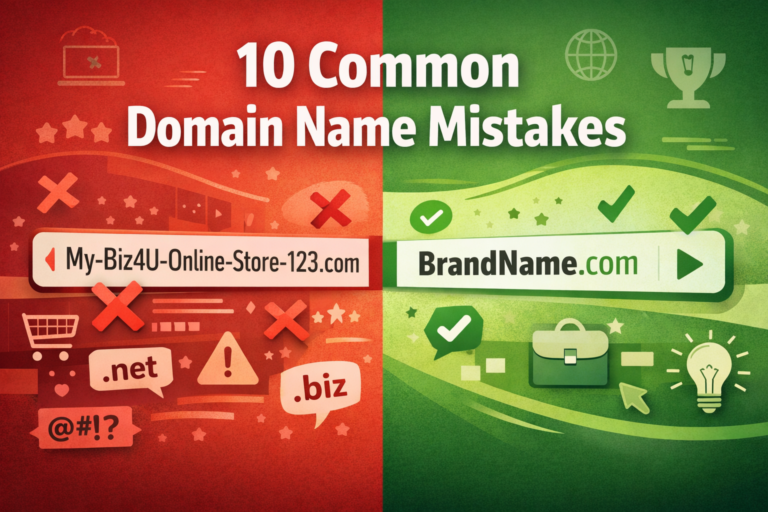
Red Flags I Avoid:
- Trademark risks
- Hyphens (-)
- Numbers (unless meaningful)
- Confusing words
- Overly long phrases
Even a decent domain can lose value if it creates friction.
9. Use Case Versatility
In domain valuation process you should always remember, a powerful domain can serve multiple purposes:
- Brand
- Blog
- SaaS product
- Marketplace
- Content platform
Example:
“AdProcessor.com” can be:
- Ad tech platform
- Marketing SaaS
- Analytics tool
The broader the use case — the higher the value.
10. Emotional & Psychological Impact
This is underrated. Some domains just feel premium.
They:
- Sound authoritative
- Inspire trust
- Create curiosity
That emotional connection often drives buying decisions.
Putting It All Together
In the process of Domain Valuation, when I evaluate a domain, I don’t look at just one factor.
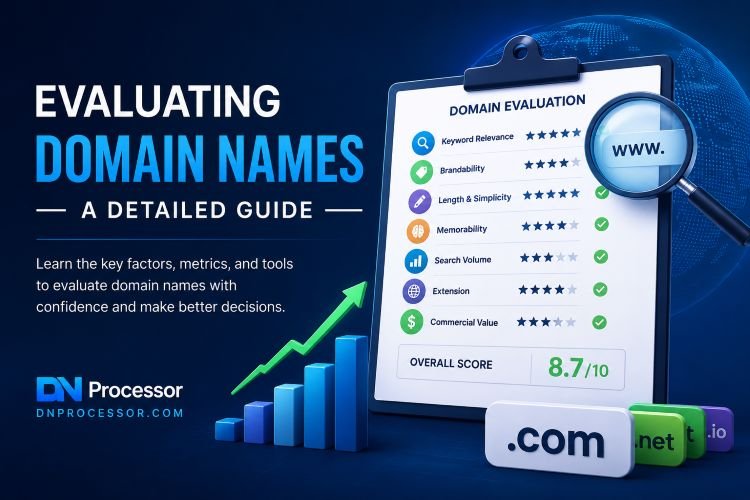
I mentally score it across:
- Brandability
- Length
- Keywords
- TLD
- Commercial intent
- Demand
- Memorability
My Simple Domain Valuation Framework:
A valuable domain = Brand + Clarity + Demand + Monetization Potential
How I Appraise a Domain Name (My Practical Method)
After understanding all the factors, the real question becomes: How do I actually evaluate a domain name in practice?
Over time, I’ve developed a simple but effective appraisal approach.
Step 1: Quick First Impression Test
I ask myself: Does this sound like a real brand? Would I trust a business with this name?
If the answer is “no,” I usually stop right there.
Step 2: Factor-Based Scoring
I mentally score the domain across key areas:
- Brandability → /10
- Length & Simplicity → /10
- Keyword Value → /10
- Commercial Intent → /10
- Market Demand → /10
This gives me a rough score out of 50.
Step 3: Use Case Clarity
I ask: Who will actually buy this domain? If I can clearly identify the following.
- Target buyer
- Industry
- Use case
Then the domain has stronger value.
Step 4: Monetization Potential
This is critical in my evaluation.
- Can this domain generate traffic?
- Can it convert visitors into revenue?
- Can it support ads, products, or services?
If yes — value increases significantly.
Step 5: Risk Check
Before finalizing, I always check:
- Trademark issues
- Confusing spellings
- Limited usability
Even a good domain can lose value due to risk.
Real-World Insight from My Experience
Over time, about Domain Valuation I’ve learned:
- Not every short domain is valuable
- Not every keyword domain converts
- Not every .com sells
But when the right factors align, the value becomes obvious. That’s when you’re holding a premium domain.
Final Thoughts about Domain Valuation
A domain name is not just a URL.
It’s:
- Your brand identity
- Your first impression
- Your long-term digital asset
If you choose wisely, it can:
- Reduce marketing costs
- Improve trust
- Increase conversions
And in many cases — It can become your most valuable digital property.