Starting a website sounds exciting… until you actually try to buy your first domain name. I still remember how confusing it felt the first time I did it.
I thought I would simply type a name, click a button, and be done in five minutes. Instead, I suddenly found myself looking at:
- different extensions,
- hosting plans,
- privacy protection,
- premium domain pricing,
- SSL certificates,
- and dozens of upsells I barely understood.
At one point, I even wondered if I was doing something wrong.
Over time, after buying, managing, researching, and evaluating domain names for years, I realized something important:
- Buying a domain name is not just a technical task.
- It is the beginning of your online identity.
Whether you want to:
- start a blog,
- launch a business,
- build a portfolio,
- create a freelance brand,
- or simply secure your idea online,
Your domain name becomes the foundation of everything that comes later.
And honestly, that’s why I tell beginners not to rush this decision.
The right domain name does not just “sound good.”
It feels natural, memorable, trustworthy, and something you can confidently build upon for years.
So in this guide, I’ll walk you through exactly how I would buy a domain name today if I were starting completely from scratch again.
What Is a Domain Name? (Simple Explanation)
The simplest way I explain a domain name is this:
A domain name is your website’s address on the internet.
Just like your home has a physical address people use to visit you, your website also needs an address so people can find it online.
For example:
- google.com
- youtube.com
- amazon.com
These are all domain names.
Without domain names, people would need to remember long, technical IP addresses composed of numbers. Obviously, that would be difficult for almost everyone.
A domain name makes your online presence easier to remember, easier to share, and far more professional. And if you ask me, this is where many beginners underestimate the importance of choosing a good one.
Because once people start associating your work, content, business, or services with a domain name, that name slowly becomes part of your brand identity.
Before Buying a Domain, Here’s What I Would Think About First
One mistake I see many beginners make is rushing to register the first available name they find.
I understand the excitement. But before buying anything, I would first ask myself a few simple questions.
1. What Am I Building?
Is this domain for:
- a blog,
- a business,
- a personal brand,
- an affiliate website,
- a portfolio,
- a startup idea,
- Or a future project?
The clearer your purpose is, the easier the naming process becomes.
For example:
- A personal blog can be more creative.
- A local business may benefit from clarity.
- A startup may prefer a more brandable name.
- An informational website may work well with keyword-rich domains.
The domain should align with the project’s direction.
2. Can Someone Remember It Easily?
This matters more than people realize.
A good domain name should be:
- easy to spell,
- easy to pronounce,
- easy to type,
- and easy to remember later.
If someone hears your domain name once, they should ideally remember it without writing it down.
That’s usually a good sign.
3. Would I Still Like This Name One Year From Now?
This is a question I often ask.
Some names feel exciting in the moment because they follow trends. But trends change quickly. I prefer names that still feel relevant and usable long-term.
Because changing domains later can become difficult once your website grows.
My Personal Advice for Choosing a Good Domain Name
Over time, I’ve noticed certain types of domain names work better than others. Here are a few things I personally try to follow.
Keep It Short
Shorter names are usually:
- easier to remember,
- easier to type,
- and cleaner for branding.
That doesn’t mean every long domain is bad.
But simplicity helps.
Avoid Hyphens and Numbers
This is one of the most common beginner mistakes.
Imagine telling someone your domain verbally:
“My website is example-4-you.com”
Now you immediately need to explain:
- Is that the number 4 or the word four?
- Where is the hyphen?
- Did they type it correctly?
It creates unnecessary confusion.
Cleaner is usually better.
Try to get a .com If Possible
I personally still prefer .com for most projects.
Why?
Because:
- It feels familiar,
- people trust it,
- and most users naturally type .com by default.
That said, other extensions can also work well depending on the project:
- .org
- .net
- .co
- .tech
- .store
- .online
But if a good .com is available within your budget, I would strongly consider it.
Think Like a Brand, Not Just a Keyword
Years ago, exact-match keyword domains were extremely popular. Today, branding matters much more.
I personally prefer names that:
- feel memorable,
- have personality,
- and can grow with the business.
A strong brandable domain usually lasts longer than a purely SEO-focused one.
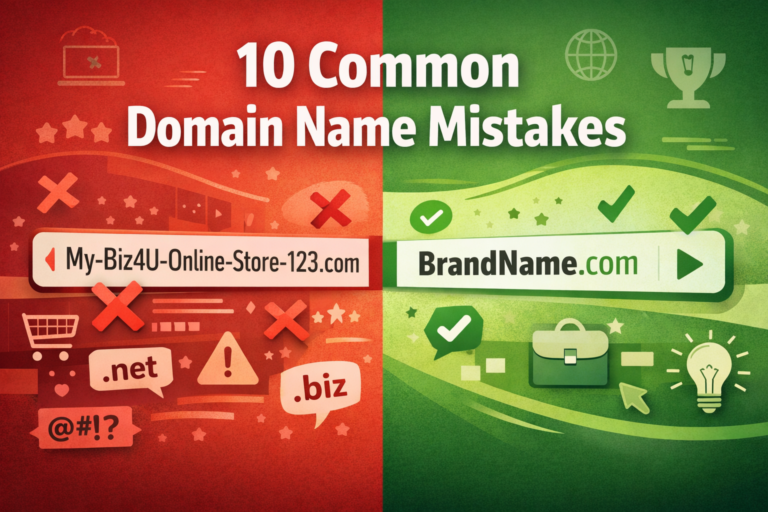
Good Read: 10 Common Domain Name Selection Mistakes
Where I Personally Buy Domain Names
People often spend too much time trying to find the “perfect” registrar.
Honestly, most beginners simply need a registrar that is:
- reliable,
- easy to use,
- reasonably priced,
- and gives proper domain control.
Some popular registrars I usually recommend exploring are:
- Namecheap
- Hostinger
- GoDaddy
- Domain.com
Each has its pros and cons.
Personally, I usually pay attention to:
- renewal pricing,
- ease of DNS management,
- support quality,
- and overall dashboard usability.
Because buying the domain is easy. Managing it properly later matters most.
How I Would Search for My Domain Name
Once I have a few ideas in mind, I start checking availability. Most registrars have a search box where you simply type the domain name and see if it is available. Sometimes the exact name is available immediately. Sometimes it isn’t.
And honestly, this is normal. Many good domain names are already registered.
If the exact name is unavailable, I usually:
- try simpler variations,
- remove unnecessary words,
- explore different brand angles,
- Or test alternate extensions carefully.
But I try not to force awkward naming just because my first choice is unavailable.
A slightly different clean name is usually better than a complicated version of the original idea.
What I Would Avoid When Buying My First Domain
If I had to start again today, these are the mistakes I would avoid immediately.
1. Buying Too Many Domains Too Early
This happens a lot.
Beginners get excited and suddenly register:
- 10 domains,
- 20 domains,
- sometimes even more.
I understand the excitement because I’ve personally been deeply involved in domain investing myself.
But for a beginner, focus is more valuable than quantity. One good domain is enough to start.
2. Ignoring Renewal Costs
Some domains look very cheap during the first year. But the renewal price later becomes much higher.
Always check:
- yearly renewal cost,
- transfer pricing,
- and hidden add-ons.
This matters more than most beginners realize.
3. Buying Trend-Based Names Blindly
Trendy names may sound exciting today. But if the trend disappears, the domain may quickly lose relevance.
I prefer names that can survive changing trends.
4. Forgetting Social Media Availability
Even if you are not using social media immediately, I still recommend checking:
- Instagram,
- LinkedIn,
- YouTube,
- X/Twitter,
- and Facebook usernames.
Consistency helps branding.
Domain Add-Ons: What Actually Matters?
When buying a domain, registrars often show many extra services.
Some are useful.
Some are optional.
Some beginners do not need it immediately.
Here’s how I personally look at them.
WHOIS Privacy Protection
I generally recommend this.
Without privacy protection, your personal details may become publicly visible in domain records.
Privacy protection helps reduce:
- spam,
- unwanted calls,
- and unnecessary exposure.
SSL Certificate
If you plan to build a website, SSL is important. It helps secure your website and enables HTTPS.
Most hosting providers today include free SSL certificates, so you usually do not need to overpay for this separately.
Hosting
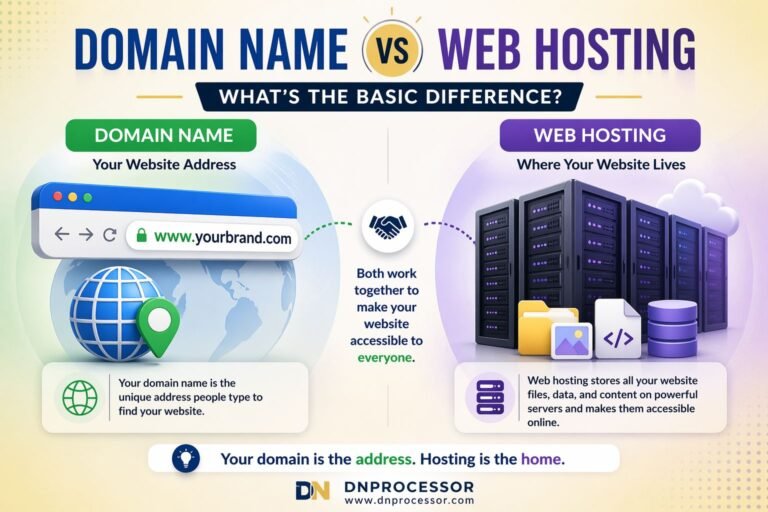
A domain name and hosting are different things. The domain is your address.
Hosting is where your website files actually live. Some beginners confuse the two initially, which is completely normal.
Completing the Purchase
Once I finalize the domain:
- I add it to the cart,
- review the pricing carefully,
- remove unnecessary upsells,
- and complete the purchase.
One thing I usually recommend enabling is auto-renewal.
Because losing a domain accidentally due to missed renewal can be painful — especially once your brand grows around it.
What I Would Do Immediately After Buying the Domain
This part is very important. Buying the domain is only the beginning.
Here’s what I would do next.
1. Connect It to Hosting
This makes the domain actually point to your website.
2. Install WordPress
Personally, I still believe WordPress is one of the best ways for beginners to start building websites.
It is flexible, scalable, and beginner-friendly once you get comfortable with it.
3. Create a Professional Email
A custom email instantly looks more trustworthy.
For example:
Looks far more professional than random free email IDs.
4. Secure Your Social Handles
Even if you are not active yet, securing the usernames early helps protect your brand identity.
5. Start Publishing Content
This is where many people get stuck. They spend weeks choosing themes, logos, colors, and layouts…
…but never actually publish anything.
Your domain becomes valuable when you build something useful on top of it.
My Honest Final Thoughts
If you are buying your first domain name today, my biggest advice is simple:
- Do not overcomplicate it.
- Your first domain does not need to be perfect.
- It needs to be meaningful enough that you feel motivated to build on it.
Some of the strongest brands online today started with simple domain names backed by consistency, effort, and long-term vision.
And honestly, that’s what matters most. The domain itself is only the beginning.
What truly gives a domain value is:
- the work you put behind it,
- the trust you build,
- the content you create,
- and the people who eventually remember it.
So take your time. Think clearly. Choose wisely. And once the right name feels right…register it before someone else does. If you want to bounce a few thoughts before you take action, do not hesitate to reach out to my team or me.