When I first started buying domain names, I genuinely thought the process was simple.
Find a good name. Register it. Wait for someone to buy it. That was pretty much my entire strategy.
And honestly? That’s how many beginners enter the domain investing space. The industry looks deceptively easy from the outside. You see stories of domains selling for thousands—or sometimes millions—of dollars, and naturally, your brain starts scanning every available name like hidden treasure.
But after years of being around domain investors, startup founders, affiliate marketers, SEO professionals, and small business owners, I realized something important:
Most domain names are not investments. They’re just registrations.
That distinction matters more than beginners initially realize as they get into domain investing.
A domain only becomes valuable when:
- It solves a branding problem
- Creates business clarity
- Attracts attention
- Helps someone make money
And that’s exactly where beginners usually struggle.
They buy names they personally like instead of names businesses might actually want.
I made that mistake too.
I still remember registering a few domains years ago because they “felt futuristic.” Some sounded clever at 2 AM. A few even impressed friends. But when I revisited them months later, I couldn’t clearly explain who would realistically build a business on them.
That’s usually the first sign.
If you can’t visualize the business, the buyer probably can’t either.
So What Exactly Is Domain Investing?
At its core, domain investing is the practice of buying domain names with the expectation that they may become more valuable in the future.
- Sometimes investors flip domains quickly.
- Sometimes they hold them for years.
- Sometimes the domain itself becomes the foundation of a real business.
That last part changed my own thinking over time. Earlier, I used to evaluate domains mostly from a resale angle:
“Would someone buy this?”
Now I often ask the following question.
“Could this become a real online brand?”
The second question tends to filter out weaker ideas much faster.
Because the internet has matured. Businesses today care less about random keyword stuffing and more about:
- Memorability
- Trust
- Brandability
- Positioning
That’s why a name like:
- Shopify
- Canva
- Stripe
- Zillow
works so well. None of them explains the entire business literally. Yet they feel strong, clean, and ownable. Good domains often create a feeling before they create understanding.
Why Domain Names Still Matter
Every few years, someone says:
“Domain names are no longer important.”
And yet businesses continue paying serious money for the right names.
Because a domain isn’t just a technical address anymore. It becomes part of your business, or they are your business.
- Marketing
- Credibility
- Email communication
- Investor perception
- SEO trust
- Offline recall
I’ve personally seen small businesses spend heavily on social media ads while still using long, awkward domain names that customers forget immediately.
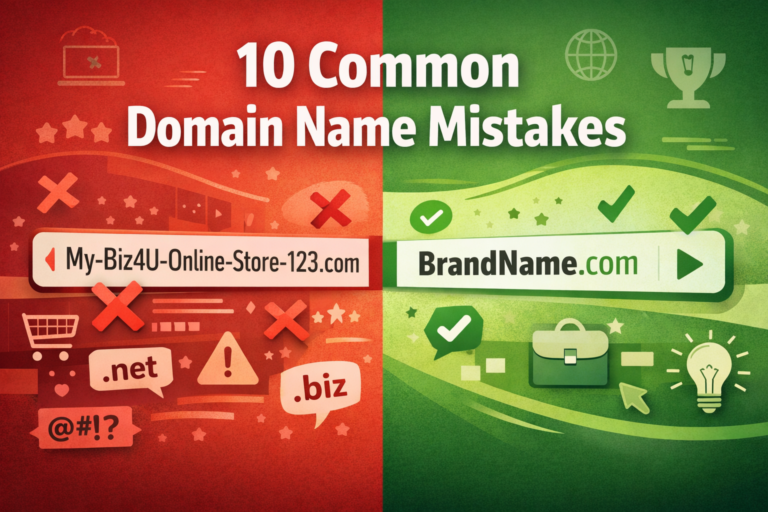
The difference becomes obvious when you compare domain names:
best-finance-consulting-services-india.net
vsTaxVola.com
One feels temporary. The other feels like a business. That emotional difference matters more than many beginners realize.
My First Realization About Domain Investing
One of the earliest lessons I learned was that availability does not equal value.
Just because a domain is available to register for ₹800 or $10 doesn’t mean it’s undervalued.
In fact, most available domains are available because nobody wanted them enough to renew them.
That sounds harsh, but it’s true.
The good part is that beginners don’t need premium six-figure domains to start. What they actually need is:
- Observation
- Pattern recognition
- Patience
A surprising number of solid domain investments come from understanding trends early.
A few years ago, many people ignored:
- AI-related domains
- Crypto terminology
- Creator economy keywords
- SaaS-style naming patterns
Then demand shifted. Suddenly, names that had looked “too niche” started to make sense. Industry timing quietly plays a huge role in domain investing.
The Types of Domains Beginners Usually Understand Faster
I’ve noticed beginners generally connect better with domains when they can immediately imagine a business behind them.
That’s why I usually divide beginner-friendly investing into a few practical categories rather than relying on overly technical definitions.
Brandable Domains
These are names that feel like businesses. Not necessarily exact keywords. Not necessarily SEO-focused. But memorable.
Some of my personal favorites are domains whose names naturally open possibilities.
For example:
Even without explanation, you can roughly imagine:
- What industry do they belong to?
- What kind of startup could they become?
- What audience do they target?
That mental imagery is powerful. Experienced investors often say
“A good domain should create instant positioning.”
I completely agree with that now.
Keyword Domains
These are more direct Domain Names like HomeLoanSupport.com, RoofingEstimate.com, CreditRecovery.in
They usually communicate intent immediately and work well in industries where search traffic matters, lead generation matters, or trust comes from clarity.
But I’ve also noticed that beginners sometimes overestimate the value of keyword domains simply because they contain popular search terms. Not every keyword domain has buyer demand.
That’s another subtle lesson the market teaches over time.
Geo Domains
These often work surprisingly well for freelancers and local businesses like MumbaiFreelancer.com, instantly telling you the target audience, service area, and probable use case.
Geo domains may not always command massive resale value, but they can become highly practical digital assets.
Especially when paired with: local SEO, lead generation, or service businesses.
Where Most Beginners Go Wrong
Honestly, the biggest problem usually isn’t lack of intelligence.
It’s excitement.
Domain investing triggers the same feeling many people experience while online shopping:
“What if someone else takes it?”
That urgency causes impulsive registrations. I’ve done it myself.
You suddenly convince yourself that a strange spelling, random AI term, or ultra-long phrase could become the next big startup.
A few renewals later, reality starts setting in. The annual renewal cycle is where many investors quietly learn discipline.
Quantity Feels Productive – Until Renewal Time Arrives
I’ve seen beginners register: 50, 100, even 300 domains within weeks. At first, it feels exciting. Your registrar dashboard looks like a growing digital portfolio.
Then renewal emails start coming. That’s usually when investors begin separating emotional registrations from strategic registrations.
If I had to restart today, I would rather own 10 carefully chosen domains than 200 weak speculative names.
A smaller portfolio also forces deeper thinking. You become more selective. And selectivity is probably one of the most underrated skills in domain investing.
One Thing Experienced Domainers Quietly Watch
A domain’s “business fit.” Not just whether it sounds nice.
But whether startups would pitch with it, customers would trust it, investors would fund it, or advertisers would comfortably promote it.
That practical business lens changes everything.
I’ve noticed many experienced domain investors instinctively evaluate domains like miniature businesses—not collectibles. That mindset significantly improved my own decisions.
My Personal Approach Before Registering a Domain
These days, before buying a domain, I usually pause and ask myself a few practical questions:
Can I imagine a homepage for this?
Sometimes I mentally visualize the logo, the landing page, the tagline, even the navigation menu. Oddly enough, weak domains often collapse during this mental exercise.
Would I confidently say this aloud in a meeting?
This matters more than people think. Domains with awkward pronunciation or confusing spelling create friction. Good names usually flow naturally in conversation.
Does the domain sound trustworthy?
Certain names accidentally sound spammy or temporary. Others sound stable. That perception matters in industries like finance, healthcare, legal, SaaS, and consulting.
Would I personally build on it?
This question became important for me later. Because domains today are no longer just flip assets.
Many investors are now building affiliate sites, creating SaaS tools, launching newsletters, generating leads, or building content brands around their domains. The line between domainer and entrepreneur has become thinner.
A Reality Beginners Should Understand Early
Most domains will never sell. Even strong investors experience long holding periods.
This industry rewards patience, timing, trend awareness, and portfolio quality. Not constant activity.
Sometimes the best move is simply not registering a mediocre domain. Oddly enough, restraint is profitable in this industry.
Should Beginners Focus Only on .COM?
In most cases, I still think .com remains the strongest extension globally. Especially for business credibility.
But I also think beginners should stay practical rather than blindly follow rigid rules.
For example:
- .in works well for India-focused businesses
- .io still performs strongly in startup and tech spaces
- .org works in educational or community-driven niches
What I usually discourage beginners from doing is registering random exotic extensions just because they’re cheap. Cheap registrations can become expensive habits over time.
Can You Actually Make Money from Domain Investing?
Yes, but usually not in the way YouTube thumbnails make it seem. The consistent money often comes from better judgment, understanding business trends, and long-term positioning.
Sometimes a domain sells unexpectedly after years. Sometimes a domain becomes more valuable because an industry suddenly grows. And sometimes the real value comes from building something on the domain yourself.
Personally, I’ve started appreciating domains more as digital foundations, brand assets, and business infrastructure. Rather than lottery tickets. That shift changed the quality of the domains I buy.
My Advice If You’re Starting Domain Investing Today
- Start slowly.
- Study naming patterns.
- Observe startup branding.
- Read domain sales discussions.
- Watch how modern SaaS companies name products.
And most importantly, -> Don’t register domains just because they are available.
A domain should ideally feel usable, believable, commercially sensible, and memorable.
Over time in domain investing, your instincts improve. You begin spotting names that feel “real.”
Not perfect. Not magical. Just commercially believable.
And honestly, that’s where good domain investing usually begins. Why not connect with me to discuss this more and share some in-depth experience and thoughts with each other? You can connect with the team, too.